

 Bird feeders are one of the best ways to bring a bit of the wild to your windowsill or yard. They also set the stage for one of the best shows in town, with more clowning, brawling, singing and courting than you'll find in all of Shakespeare.
 Backyard Birding & Wildlife
Get a Bird Book ~ each New Arrival will Delight You even More.
Backyard Birding & Wildlife
Get a Bird Book ~ each New Arrival will Delight You even More.
 Choosing a Feeder
 The tube feeder is relatively new. Its innovative design keeps the seed dry and discourages bullies like blue jays. Tube feeders are sealed at the bottom, with a cap at the top that you remove when you add seed. Typically they're made of clear plastic, which lets birds and you see what's inside and how much is left. Most feature two to six feeding ports, each with its own perch. When birds visit the feeder, they're out in plain view, which makes them easy to watch. Just hang tube feeders from a branch. Such feeders appeal most to small songbirds, who will drop enough seed to attract ground-feeding birds as well.
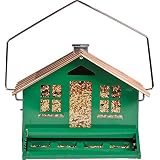
 These designs are modeled after the drop feeders used on chicken farms. They have one or more receptacles that funnel down to a small opening. The seed drops out onto a tray. When birds eat, more seed drops down from the hopper. Hopper feeders often resemble houses, and their roofs help keep moisture off the seed. Like tube feeders, hopper feeders tend to attract small songbirds. You can suspend your feeder or mount it on a pole.
 Platform feeders are open-air smorgasbords for birds of all shapes and sizes. (Feeding tends to be a matter of "might makes right," with big birds served first.) Designs usually feature a simple wooden frame with a window-screen bottom backed up by hardware cloth, which allows moisture to drain through. You can buy one or build your own.
 These feeders appeal mostly to hummingbirds, but they also draw orioles and other nectar lovers. We've all seen these glass or plastic reservoirs with their bright red plastic bases and tubular feeding ports. The color is supposed to attract hummingbirds, but they'll find a nectar feeder, whatever color it is.
 You can attract a much wider group of feathered feasters if you provide a suet feeder along with one that dispenses seed. Suet is the hard fat that surrounds the kidneys of sheep, cows and other animals. Doesn't sound too appetizing to us, but it's ambrosia to insect-eating birds. Buy fresh suet from the grocery store in small slabs, or buy suet cakes, made of rendered (or boiled) suet mixed with seed and other tasty treats.
 Selecting Bird Seed
 When you first shop for birdseed, you may be surprised and confused by the number of choices and prices.
  You'll appeal to more birds with sunflower seeds than any other food you can offer, and serving sunflower hearts spares you the chore of raking up the hulls or pulling up fierce grasses that sprout from seeds that the birds discard. Bargain mixes contain some of the more desirable seeds, such as sunflower, millet and safflower, plus wheat kernels, milo (a kind of sorghum) and cracked corn all essentially filler. Read labels carefully: ingredients are listed in order by quantity. Start with a small bag at a mid-range price and see how the birds react. If you try different seeds and mixtures, you'll quickly find one the birds love and you can afford.
 Picking a Spot for Your Feeder
This squirrel feeder table comes with a cute red umbrella which can attract quickly squirrel???s attention. The squirrel food station is fixed by two nails. The product doesn???t need to be assembled, just need to be fixed on the tree. One person can easily complete the installation. In addition, this way the fixation is more stable. The feeder is difficult to shake with the wind.
Squirrels love birdseed as much as birds do, and being much larger than most birds, they can eat a lot of it. You can try luring them away from your bird feeder by keeping them busy with an alternative and less expensive food, such as cracked corn.
You can also try one of the many "squirrel-proof" feeders on the market. The better models have a semicircular baffle above the feeder, which prevents squirrels from climbing down the hanging wire to get at the feeder.
Also, try to hang your feeder from an isolated branch, as squirrels can easily jump 4 feet from a nearby branch, tree, or fence.
 The Sibley Guide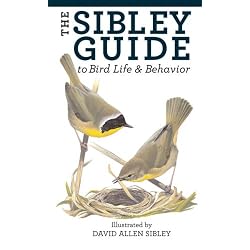
The new landmark book from David Allen Sibley. Designed to enhance the birding experience and to enrich the popular study of North American birds, the book combines more than 795 of his full-color illustrations with authoritative text by 48 expert birders and biologists. In this new guide Sibley takes us beyond identification, to show us how birds live and what they do.
Mountain Chapel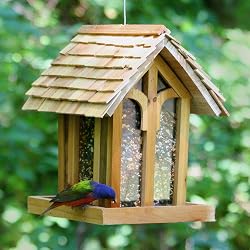
▸ Holds up to 3.6 lbs. of seed
▸ Natural design
▸ Gorgeous leaf print windows
▸ Transparent seed compartment
▸ Easy to monitor seed levels
📌 We are a participant in the Amazon.com Services LLC Associates Program, an affiliate advertising program designed to provide a means for us to earn fees by linking to Amazon.com and affiliated sites.